The Sound of the Luo: Music and Dance
For the Luo, music is the heartbeat of life.
_Ohangla_ is the oldest sound — a big drum, a guitar, and voices calling. Men dance with strong shoulders while women in bright _deras_ spin and ululate. The beat is fast and proud, made for weddings and homecomings.
Then came _benga_. The bass walks, the lead guitar cries, and the singer tells stories of love, politics, and _Nam Lolwe_. Artists like D.O. Misiani and Prince Omari made benga the voice of Nyanza.
At funerals, _telo_ songs mourn. At parties, _ohangla_ celebrates.
For the Luo, to dance is to speak. Every drumbeat carries history.
Lwanda Magere is a legendary warrior in Luo oral tradition, remembered for his extraordinary strength and courage. According to the traditional story, his body was believed to be as hard as stone, making him almost impossible for his enemies to defeat. He became a powerful protector of the Luo people and a feared warrior among their enemies. However, despite his great strength, his enemies eventually discovered his weakness through deception. His story has been passed down through generations as a powerful tale of bravery, wisdom, betrayal and the dangers of revealing one's weakness.
Cultural Context
The story of Lwanda Magere is an important part of Luo oral literature and cultural heritage. His extraordinary strength represents courage, leadership and the ability to protect one's community. At the same time, his eventual defeat teaches that physical strength alone is not enough and that secrecy, wisdom and careful judgment are important. The legend also demonstrates how Luo communities used storytelling to preserve history, transmit moral lessons and celebrate heroic figures. Different communities may preserve slightly different versions of the story.
Language: Dholuo · Origin: Nyanza western kenya
🏛 CULTURAL MEANING
Unverified
Beyond its moral and historical dimensions, the legend of Lwanda Magere also reflects the Luo people's deep connection to spirituality and the natural world. His invulnerability, tied to his shadow, symbolizes the idea that true strength often lies in what is hidden or overlooked. The betrayal by his wife—who discovers and reveals his secret—highlights themes of trust, intimacy, and the vulnerability that comes with love. The story is not just a tale of war and heroism, but also a meditation on human frailty and the consequences of misplaced trust. It continues to be performed in oral traditions, songs, and even modern adaptations, keeping the memory of Lwanda Magere alive across generations.
Added by Sylvia Nasimiyu
Rose Nyaboke
Fascinating breakdown! I'd add that Lwanda Magere's story also serves as a cautionary tale about pride and over-reliance on physical might. His downfall comes not from a stronger enemy, but from a secret exposed—reminding us that no hero is invincible. It's amazing how these oral traditions evolve while still carrying such timeless lessons. Would love to hear how different Luo sub-groups narrate his death—I've heard versions where he turns to stone, which feels almost poetic.
Long before Legio Maria became a church, she was a whisper passed between homesteads in Nyanza — a woman seen only after dark, moving through the hills of Awendo and Homa Bay like a shadow with a purpose no one could name. They called her Min Omollo Kanyunja, and even now, saying her name out loud on a quiet night still makes elders lower their voices.
Cultural Context
Her legend sits at the root of one of Kenya's most significant homegrown religious movements. Around 1938, Luo believers reported repeated visitations from a mystic woman carrying a message about the incarnation of Christ as a Black man — appearances that would eventually give rise to Legio Maria, an African-initiated church that broke from Catholic lay tradition in the early 1960s. Min Omollo Kanyunja is remembered as central to that founding vision, and some faithful link her to other Luo mythical women tied to the land — the story of Nyamgondho Kombare in Gwassi, and the tale of Simbi Nyaima, the village swallowed by a lake in Karachuonyo. She isn't just a ghost story told to keep children indoors after dusk. She's a figure standing at the crossing point between old Luo cosmology and a new African-led Christianity — proof that spiritual authority in Nyanza was never only imported from outside.
Language: Dholuo · Origin: Awendo homabay
🏛 CULTURAL MEANING
Unverified
An important point, however, is that the story of Min Omollo Kanyunja should be approached as a mixture of religious history, oral tradition and later interpretation. The connection between her and the emergence of Legio Maria is part of the movement's remembered spiritual history, but many details surrounding her reported appearances are not independently documented in the way a conventional historical event would be. This is why descriptions of her as a supernatural figure, prophetess, or manifestation of divine revelation should be presented as matters of faith and tradition rather than established historical fact.
The wider history of Legio Maria is nevertheless significant. The movement emerged from the religious and social environment of western Kenya in the mid-20th century and developed an explicitly African expression of Christianity. Its traditions incorporated Catholic elements while giving considerable importance to African spiritual experience, prophecy, healing and locally meaningful religious symbolism. In that sense, figures such as Min Omollo Kanyunja are important not merely because of the stories told about them, but because they illustrate how Christian ideas were interpreted, experienced and reshaped within Luo society.
It is also worth separating Min Omollo Kanyunja from other well-known figures associated with Legio Maria. Accounts of the movement's history contain several prophetic and visionary figures, and oral traditions can vary considerably between communities and generations. Therefore, claims linking her directly to specific Luo myths such as Nyamgondho Kombare or Simbi Nyaima should be understood as interpretive cultural connections unless supported by a specific historical or ethnographic source.
Ultimately, the significance of Min Omollo Kanyunja lies in the way her story sits at the intersection of Luo oral tradition, African religious consciousness and the development of an indigenous Christian movement. Whether one understands the accounts literally as supernatural encounters or symbolically as expressions of a changing religious world, they provide an important window into how communities in Nyanza negotiated Christianity while retaining their own cultural identity.
The Idea of a cultural festival in the diaspora is not for a group to isolate itself but to share with, and inform the host more about who they are. Their staple food, song, dance, and humour
The Idea of a cultural festival in the diaspora is not for a group to isolate itself but to share with, and inform the host more about who they are. Their staple food, song, dance, and humour
The Ameru people of Kenya traditionally organised their society through a structured age-set system known as Ntu. Boys of roughly the same age were circumcised together and formed a lifelong age-set. Each age-set progressed through different stages of responsibility — from warriors (ntane) to junior elders and finally senior elders. This system determined a man’s social status, duties, and eligibility to join the Njuri Ncheke council of elders.
Cultural Context
The age-set system was the foundation of Ameru social organisation. It created strong bonds of brotherhood among men of the same generation, ensured orderly succession of leadership, and maintained discipline within the community. Circumcision marked the transition from boyhood to adulthood and was accompanied by important teachings on courage, responsibility, and respect for tradition. Through this system, the Ameru preserved unity, regulated power, and passed down cultural values from one generation to the next.
Language: English · Origin: Tharaka Nithi
🏛 CULTURAL MEANING
Unverified
What Joyce's explanation doesn't quite capture is how the age-set system actually functioned as a government, not just a bonding ritual.
The Ameru ran on two alternating political parties — Kiruka and Ntiba — much like Kikuyu and Maasai moiety systems. Every boy circumcised during a given period belonged automatically to whichever party was currently out of power, and the two sides traded control of community affairs at set intervals, roughly every fourteen years. It wasn't symbolic; whichever party held power actually ran the day-to-day administration and fielded the warrior regiments.
Above the age-sets sat a three-tier council structure — Areici, then the more senior Njuri Ncheke, then Mpingiri at the very top. Climbing this ladder wasn't just about age; a man had to pay an entry fee in livestock, sacrificed and shared in a ritual feast, to be formally admitted into each rank. This is why Njuri Ncheke membership was the single highest social achievement a Meru man could reach — it required decades of demonstrated wisdom plus the material means to buy your way in properly.
The system also carried real teeth. Moral violations were punished by rank: a Njuri Ncheke elder who offended a colleague paid in miraa, a warrior who broke code paid a bull, and so on down the hierarchy — meaning discipline scaled with social standing, not the other way around.
So when we say the age-set system "preserved unity," it's worth being precise: it did so by fusing military organization, criminal justice, and political succession into a single structure that every Meru boy was automatically enrolled into the moment he was circumcised.
For the Luo, Lake Victoria Nam Lolwe is more than water. It is life, identity, and livelihood.
Most Luo villages grew along the shores and rivers of Nyanza. The lake gave them fish. Omena, ngege, and kuoyo were not just food, they were trade and pride. A fisherman’s day began before sunrise, with nets and songs as he pushed his boat out.
The lake also shaped Luo beliefs. They saw it as a gift from Nyasaye, God. Rituals for rain, for safe fishing, and for blessings were often done near the water.
Music and dance came from the lake too. The rhythm of paddles became the rhythm of ohangla and benga. The call of the fish eagle became part of Luo stories told at night.
To be Luo is to know the smell of smoke, the taste of fish, and the sound of waves on Nam Lolwe.
Cultural Context
For the Luo, Nam Lolwe Lake Victoria is the center of who they are. Here’s what it means in Luo culture:
1. Source of Life and Identity
Luo settlements spread along the lake and rivers because water meant survival. To be Luo from Nyanza is to be "people of the water". The lake defines home, clan ties, and belonging.
2. Livelihood and Community
Fishing is not just a job. It’s a skill passed from father to son. Omena,@ngege, and kuoyo built trade between villages. Markets, boats, and nets created cooperation and respect for hard work.
3. Spiritual Connection
The Luo see the lake as a gift from Nyasaye. It’s where blessings are asked, where taboos are observed, and where elders pray for rain and safe journeys. Disrespecting the lake was believed to bring chira misfortune.
4. Music, Stories and Values
The rhythm of paddles and waves shaped ohanglaand benga. Stories told at night by the shore taught children about courage, respect, and the power of nature.
🏛 PERSONAL EXPERIENCE
Community Verified
I think of this song now: Ode an Viktoriasee” is a poetic spoken‑word piece by La Conteuse that blends narration, memory, and environmental reflection. The song is structured as an ode — a lyrical tribute — to Lake Victoria, one of Africa’s most culturally and historically significant bodies of water. Through calm narration and atmospheric music, La Conteuse transforms the lake into a symbolic character: a witness of history, a keeper of stories, and a source of life.
Added by O'dom K'awuor Jarabar
Source: La Conteuse, Youtube
Sylvia Nasimiyu
Javan Odoyo was "Kuoyo" used as a tool of trade in native luo?
Aciro Alele Ayaa
Kuoyo or Gondola might be foreign. Since the Music is not in Luo, no harm. Donge?
In Luo culture, marriage was never just about two people. It was about two families joining.
It started with "Ayie" the introduction. The boy’s family would send elders to the girl’s home to formally ask for her hand. If the girl’s family accepted, talks began.
Next was "Nego" the dowry negotiation. Elders from both sides would sit under a tree and discuss bride price, usually paid in cattle, goats, and money. This was not "buying" a bride. It was appreciation and a bond between families.
Then came "Tiyo gi dhi" the wedding day. The girl’s family would prepare food and bless her. She was walked to her new home, often with songs and ululation.
After some time, "Chakruok"followed — the wife was formally welcomed. She cooked for her in-laws to show she could keep a home.
Marriage in Luo culture meant respect, responsibility, and community. A home was built not on romance alone, but on elders' blessings, dowry, and duty.
🏛 HISTORICAL BACKGROUND
Community Verified
Marriage as a Clan Alliance
Historically, marriage among the Luo was not simply a union between two individuals. It was a strategic alliance between two families, clans, and lineages, designed to strengthen social networks, secure cooperation, and ensure continuity of the patrilineal line.
Because the Luo are strictly patrilineal, marriage decisions were made by elders who evaluated clan compatibility, reputation, and lineage to avoid prohibited unions (exogamy rules). A woman joined her husband’s lineage permanently, and her children belonged to his clan.
Role of the Jagam (Matchmaker)
In pre‑colonial Luo society, marriages were arranged through a jagam, a respected elder who acted as an intermediary between families. The jagam identified suitable partners, initiated negotiations, and ensured the marriage aligned with clan interests. This role was central to maintaining social order and preventing incestuous unions.
Ayie — The Foundational Consent Ceremony
The first formal stage of marriage is Ayie, meaning “I agree” in Dholuo.
Ayie is the bride’s mother’s acceptance of the initial bridewealth payment, traditionally cattle, symbolizing consent and legitimizing the union. This stage marks the bride’s transition toward the groom’s homestead and establishes binding obligations between families.
Ayie historically carried legal force within Luo customary law, predating colonial administration. It affirmed paternity, inheritance rights, and the woman’s incorporation into the husband’s lineage.
Nyombo — The Dowry Ceremony
Following Ayie is Nyombo, the main dowry ceremony.
Nyombo involved transfer of cattle, goats, and symbolic items from the groom’s family to the bride’s family. It sealed the alliance and validated the marriage under customary law. Elders conducted negotiations and could occur in stages over time, creating long-term economic ties between families.
Marriage as a Conservative Institution
Historical research shows that Luo marriage between 1894–1920 was governed by a largely unwritten Luo Constitution, "Chik"
Added by O'dom K'awuor Jarabar
Joyce Kanana
Clear and helpful summary of traditional Baganda marriage as a clan alliance. The explanation of clan exogamy and the role of the Omuko is particularly useful. Thank you for sharing this oral history.
In the evenings, the _dala_ compound was my classroom.
I’d sit beside my grandfather, _jokwaro_, as he carved a walking stick and the fire glowed low. He never raised his voice. He taught with stories and silence.
“Watch,” he’d say, pointing to the cattle. “A man provides. A man protects. A man keeps his word.”
He taught me how to herd, how to mend a fence, how to speak in _baraza_ without fear. He taught me respect for elders, for women, and for God. He told me about _chira_, about marriage, and about carrying the name of my father well.
By the time the stars came out, my hands were dusty and my heart was heavy with responsibility.
That’s how Luo boys graduated — under the tree, with grandpa.
🏛 CULTURAL MEANING
Unverified
Sarah's grandfather wasn't just passing time carving that walking stick — every word he spoke under that acacia was doing serious cultural work, and it's worth unpacking why.
Dala isn't simply "home" the way we casually use the word. It's the ancestral homestead, the anchor point that ties a Luo person to their clan and lineage even generations later — you can live in Nairobi your whole life, but your dala is still where your father's father is buried. That's why evening lessons happened there and nowhere else; the compound itself was part of the curriculum.
Jokwaro, the grandfather, held a role bigger than "elder relative." In Luo society, grandfathers were the keepers of oral law — cattle wealth, marriage customs, land boundaries — and passed it down through story rather than lecture, exactly as Sarah describes.
Chira is the heaviest word in that whole passage. It's not just misfortune — it's believed to be a supernatural consequence for breaking the proper order of things: skipping a ritual step, disrespecting seniority, ignoring an elder's counsel. Grandfathers warned boys about it because ignoring the old ways wasn't framed as rude — it was framed as dangerous.
And baraza, the public gathering for discussion and dispute, is where a boy's private lessons under the tree got tested in public. Speaking well there wasn't optional — it was proof the lessons had taken root.
That's the real weight behind "that's how Luo boys graduated" — it wasn't sentiment, it was survival training dressed as bedtime stories
In the evenings, the kitchen was my school.
I’d sit on a small stool beside my grandma, _nyarwa_, as the fire crackled and _ugali_ bubbled. She never used books. She used stories, proverbs, and her hands.
“Watch,” she’d say, stirring _sukuma_ and teaching me how to cook without wasting. “A woman feeds a home with wisdom, not just food.”
She taught me how to pound millet, how to greet elders, how to keep a home clean, and how to speak softly but stand firm. She told me about marriage, about respect, about _chira_ — what brings shame and what brings honor.
By the time the sun went down, my hands smelled of smoke and my heart was full of her lessons.
That’s how Luo girls graduated — in the kitchen, with grandma.
🏛 CULTURAL MEANING
Unverified
Reading Ruth's story, I kept nodding — because before I was a woman, I was an egesagane, and my grandmother's kitchen taught me the exact same way hers did.
We didn't cook ugali, we cooked obokima — corn paste stirred thick over the fire until your arm ached, the Gusii answer to Luo ugali. My grandmother stirred it with one hand and corrected my Ekegusii with the other. "Omogaka ng'a," she'd say — greet the elder properly, don't mumble — because how you greeted someone told the whole village how you were raised. She taught me to serve my father's food in his own separate dish, untouched until he took his portion, before anyone else could eat. That wasn't about food scarcity; it was about teaching a girl the order things happen in, long before she'd need to run her own home.
She fed me managu and chinsaga from the farm, not because we lacked variety, but because she said a woman's body carries the whole homestead, and it must be fed like it matters. Cleanliness came later, at initiation — before that, we washed at the river with our sisters and thought nothing of it. It was only once I became egesagane, ready for the cut that marked womanhood, that she started teaching me what silence to keep and what shame to avoid — much like Ruth's grandmother speaking of chira.
Where Ruth's grandmother taught in the kitchen with ugali bubbling, mine taught in the same kitchen with obokima — different pot, same fire, same lesson: a woman is trained, not born, to hold a home together.
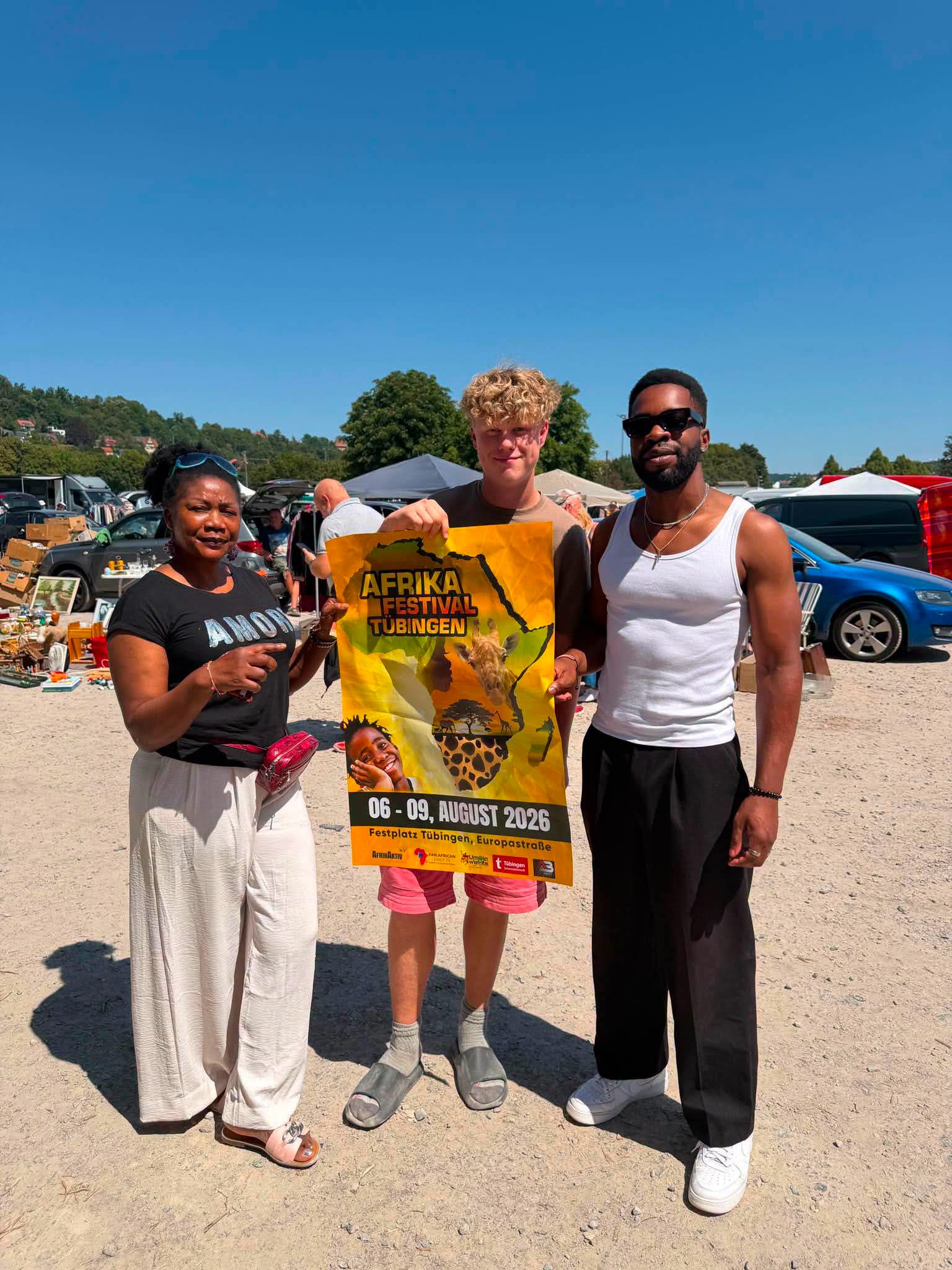
The Afrika Festival Tübingen (also called International Afrika Festival Tübingen or Umoja wa Afrika Festival) is one of the largest and longest-running African diaspora festivals in Germany and Europe.
Cultural Context
It began around 2000–2007 (with the 25th anniversary celebrated in 2025) and has been held in Tübingen since 2010. It started in Reutlingen and moved through other locations before settling in Tübingen.
Language: German, Swahili, French + · Origin: Germany
🏛 CULTURAL MEANING
Community Verified
It began around 2000–2007 (with the 25th anniversary celebrated in 2025) and has been held in Tübingen since 2010. It started in Reutlingen and moved through other locations before settling in Tübingen.
When they called my name for _tero_, my heart beat like a drum.
I walked to the place of the cut as a boy, but I knew I had to come back as a man. The pain was sharp, but I did not cry. Elders were watching. _Chuny duto_ — courage — that is what they wanted to see.
For weeks in the _mako_ hut, they taught me. How to speak with respect, how to build a home, how to protect my people, and how to fear God. No more childish games.
On the day of _rito_, I came out in new clothes. The community ululated and danced. My uncle gave me a stool to sit on in council.
That day I stopped being _odero_. I became _jaduong_.
I graduated to manhood.
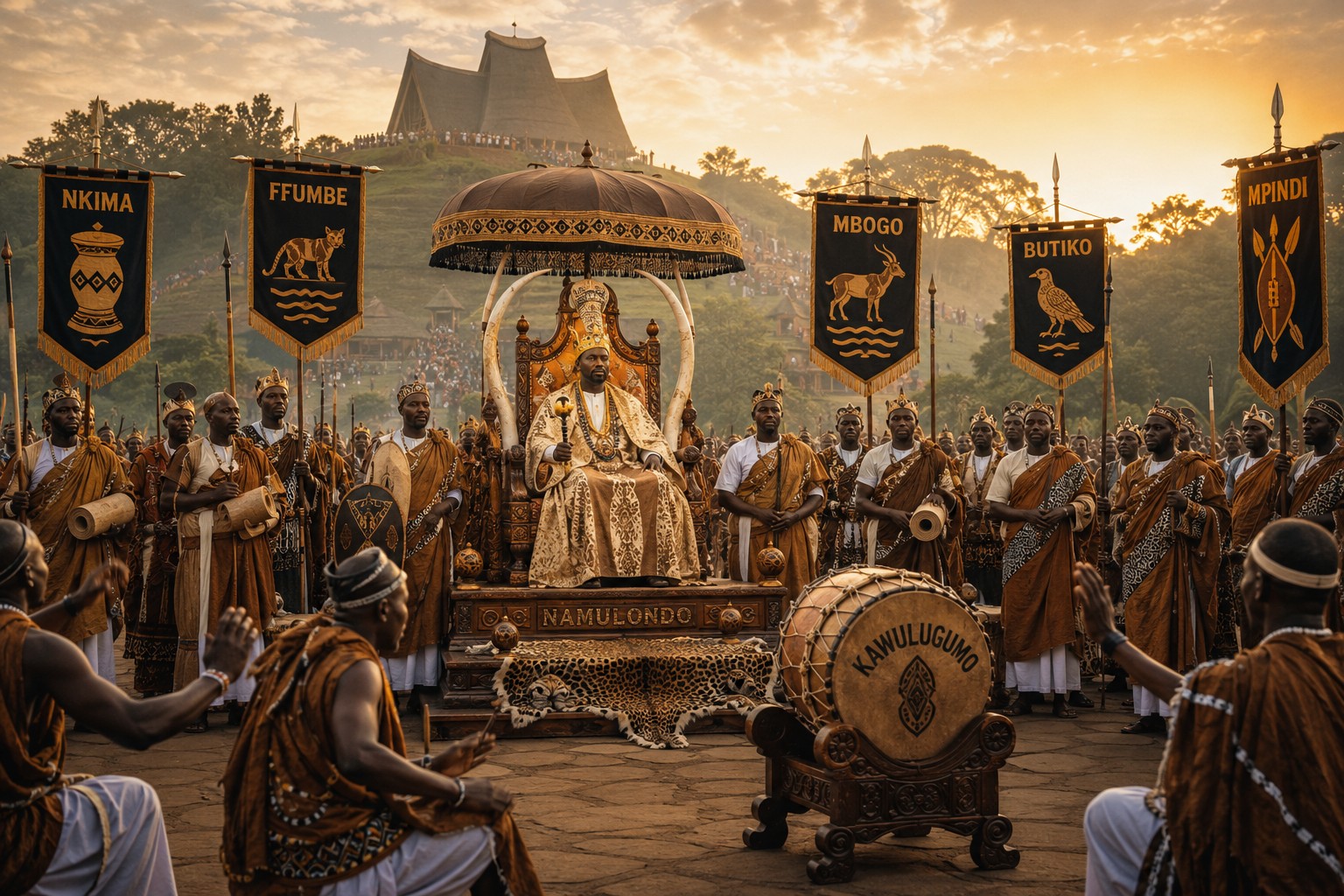
At dawn on Ennugu ya Kabaka, the sacred hill of Naggalabi Buddo awakens to drums, clan banners, and the hum of anticipation. The prince begins his journey in Bwanika, where his symbolic tears are wiped — a farewell to the fallen king.
He proceeds through ancient ritual houses, tightens the strings of Kawulugumo, the royal drum, and faces the ceremonial battle of Lwe Birumbirumbi, proving he is the rightful heir.
Clans take their ancestral roles: Abatebe from Nkima, Ffumbe, Butiko, and Mpindi carry the throne; the Mbogo clan performs Okukongojja, lifting the Kabaka onto their shoulders as the crowd chants “Ono ye Kabaka wammwe!” (“This is your king!”).
Dressed in barkcloth (lubugo), leopard skins, and crowned with Enguugu, the Kabaka is seated on Namulondo, the throne of Buganda kingship.
Elders bow, drums thunder, and the kingdom breathes anew.
Ennugu ya Kabaka is not just a coronation — it is Buganda’s heartbeat returning to rhythm.
Cultural Context
Ennugu ya Kabaka is the spiritual renewal of Buganda.
Each clan performs duties passed down for centuries, reaffirming unity and identity.
The Kabaka’s journey symbolizes cleansing, wisdom, protection, and readiness to lead.
Barkcloth from the Ngonge clan, the royal drum Kawulugumo, and the ritual battle all express Buganda’s belief that leadership is ancestral, sacred, and communal.
It is the moment when culture, spirituality, and kingdom authority merge — a living testament to Buganda’s continuity.
Language: Luganda, English · Origin: Buganda Kingdom
🏛 CULTURAL MEANING
Historically Sourced
Ennugu ya Kabaka is the spiritual renewal of Buganda.
Each clan performs duties passed down for centuries, reaffirming unity and identity.
The Kabaka’s journey symbolizes cleansing, wisdom, protection, and readiness to lead.
Barkcloth from the Ngonge clan, the royal drum Kawulugumo, and the ritual battle all express Buganda’s belief that leadership is ancestral, sacred, and communal.
It is the moment when culture, spirituality, and kingdom authority merge — a living testament to Buganda’s continuity.
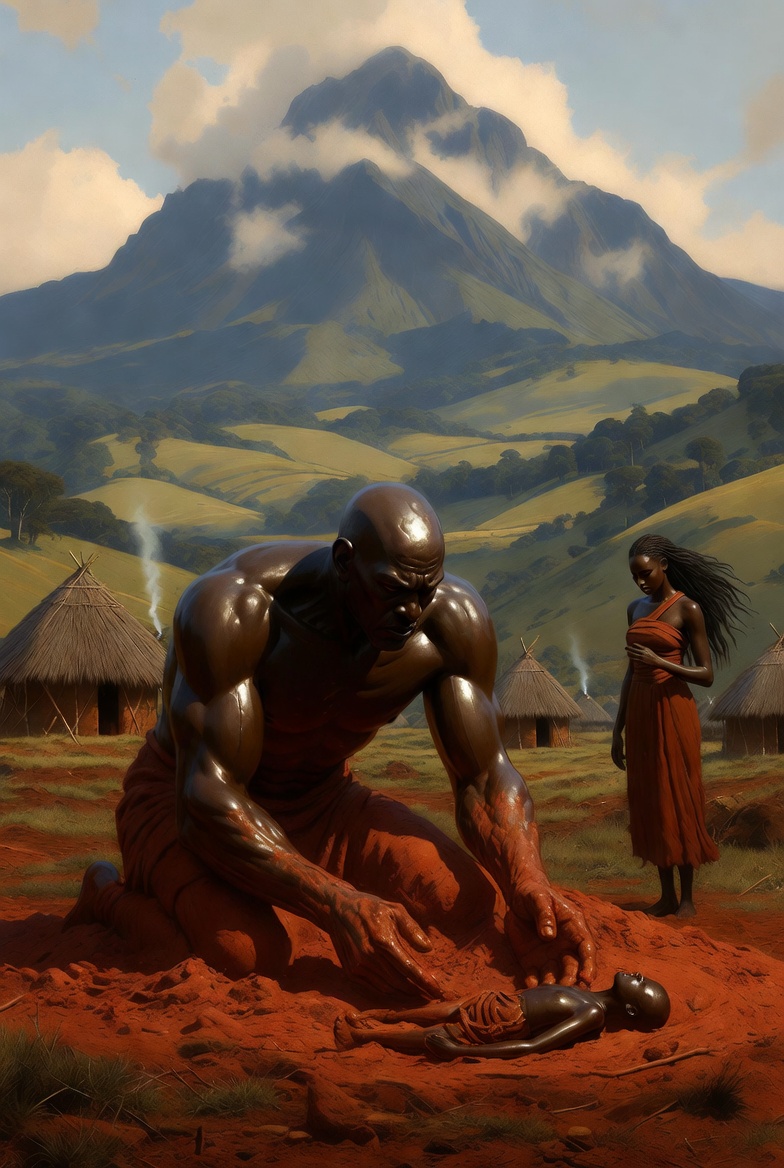
Long ago, the Creator God Wele Khakaba (also known as Khakaba) formed the first man, Mwambu (meaning "the discoverer" or "inventor"), from mud at a place called Mumbo in the west. God then created Sela to be his wife. Mwambu and Sela's descendants migrated and settled on the foothills of Mount Elgon (known to the Bukusu as Masaba). From there, their lineage grew into the Bukusu people, one of the largest sub-tribes of the Luhya nation in western Kenya. This foundational myth explains the origins and identity of the Bukusu.2e68fb
Cultural Context
This story is central to Bukusu identity and oral history. It traces their ancestry from creation by God, migration, and settlement around Mount Elgon. It underscores themes of divine creation, resilience through migration, connection to the land (especially Masaba/Mount Elgon), and unity as a people. It is often passed down through generations to instill pride, explain their Bantu roots, and link them to broader Luhya heritage. Similar creation narratives appear in related communities like the Bagisu (Bamasaba).
Language: ENGLISH · Origin: Bukusu (Western Kenya) – Bungoma and Trans Nzoia counties; Mount Elgon region
🏛 CULTURAL MEANING
Unverified
What's easy to miss reading this myth on the surface is that it's not really about how humans began — it's about how Bukusu identity itself gets legitimized.
Notice the direction of creation: Wele Khakaba first shapes the earth into a perfect cone, then heads specifically west to Mumbo to mold Mwambu. That westward movement matters — Bukusu potters to this day coil their clay counterclockwise, tracing the same east-to-west motion Wele used to build the world, and stack it into a cone shape echoing that same primordial creation. The myth isn't just backstory; it's literally reenacted every time a Bukusu potter shapes a vessel.
Mwambu's name — "the discoverer" or "inventor" — also isn't incidental. Bukusu oral tradition frames wanderlust as divinely intentional: Wele's own children were "overcome with wanderlust," which is the myth's way of explaining why a people who trace themselves to a single mud-formed ancestor ended up scattered across Mount Elgon's foothills as an entire nation of clans. The restlessness isn't a flaw in the story — it's the mechanism.
There's also a longer, more elaborate version some elders tell, tracing Mwambu further back to "Muntu we Entebbe" of Misri (Egypt), with Mwambu's descendants founding cities as far as Kush and Meroe before ever reaching Masaba. Rose's version is the more widely circulated, simplified account — worth knowing both exist, since Bukusu oral history was never one fixed text but several competing lineages of memory, each elder correcting or adding to the last.
Added by Rose Nyaboke
Rose Nyaboke
I am well versed with Bukusu traditions too. @Nasimiyu don't joke,that's the land of my aunt,where I grew up
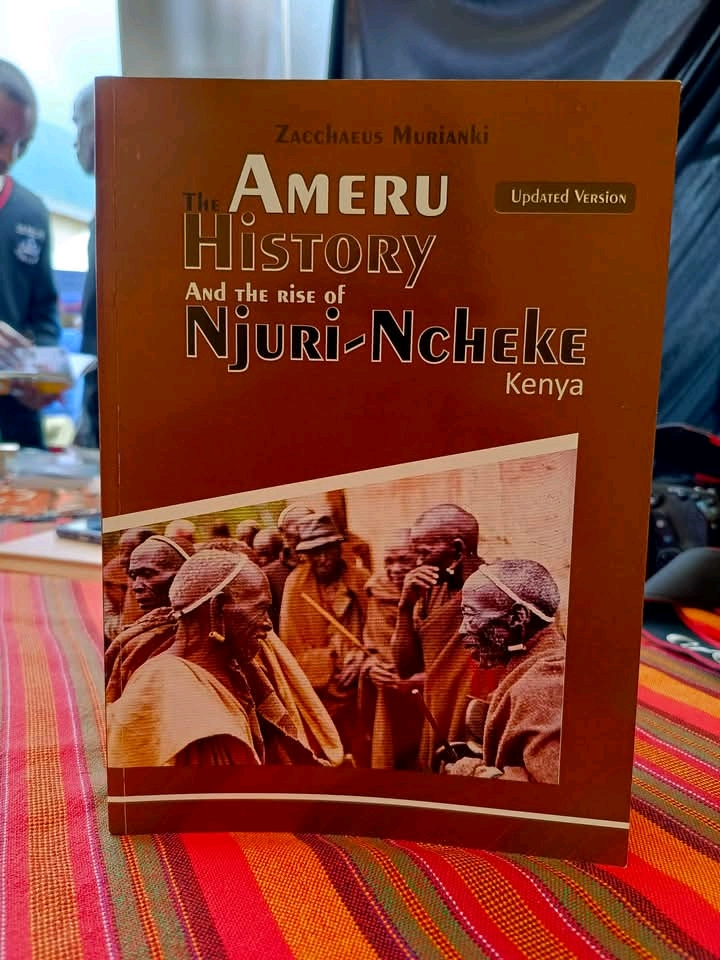
Njuri Ncheke is the traditional council of elders among the Ameru (Meru) people of central-eastern Kenya. It functioned as the highest judicial, legislative, and spiritual authority in Meru society — settling land disputes, presiding over oath-taking, blessing harvests, and issuing curses or sanctions against wrongdoers. Membership was earned through age-grade progression and community respect, not appointment.
Cultural Context
The Njuri Ncheke operated as the moral and governance backbone of pre-colonial Meru life, tied closely to the Meru age-set (Ntuki) system. Its authority was so respected that even colonial administrators had to negotiate with it rather than override it outright. Today, the Njuri Ncheke still exists in a ceremonial and advisory capacity, particularly around land matters, cultural preservation, and community mediation in Meru County. Women were traditionally excluded from formal membership, though their informal influence on decisions — through family and household negotiation — is a well-known, if less documented, part of the same history.
Language: English · Origin: Meru(Imenti)
🏛 CULTURAL MEANING
Unverified
Njuri Ncheke – Explanation
Njuri Ncheke is the traditional council of elders of the Ameru (Meru) people of central-eastern Kenya. It served as the highest authority in Meru society before colonial rule and continues to hold cultural and moral influence today.
Main Roles
It functioned as the supreme body for:
Judicial matters – settling land disputes, resolving conflicts, and judging serious cases
Legislative functions – making and upholding customary laws
Spiritual authority – blessing harvests, conducting important rituals, and overseeing oath-taking
Social control – issuing curses or sanctions against wrongdoers who violated community norms
Membership
Membership was not given by appointment or wealth. A man earned a place in the Njuri Ncheke through:
Progression through the traditional age-set system
Demonstrated wisdom, integrity, and respect within the community
Only men of proven character and maturity could join.
Cultural Importance
The Njuri Ncheke acted as the moral and governance backbone of pre-colonial Meru society. It maintained order, protected community values, and ensured that decisions were guided by custom, fairness, and the collective good rather than individual power.
Even today, the council remains an important institution among the Meru, often consulted on cultural, land, and social matters
Added by Joyce Kanana
Deleted User
Worth adding: Njuri Ncheke enforced its authority partly through a sacred oath called Kithitu — invoked against thieves, land violators, or those who broke community agreements. It wasn't just ceremonial; people genuinely feared it, which is part of why the council held real power without needing police or armed enforcement to back it up.
Rose Nyaboke
This is a well-presented explanation. It highlights the significance of indigenous governance systems in maintaining peace and social order
Aciro Alele Ayaa
This should be in a movie or, at least, a documentary, like the old British movies
People often treat animal skins as if they were the exclusive cultural trademark of one group. As though one community alone invented the groundbreaking idea of “not being cold.” In reality, animal skin was humanity’s first outfit — the global starter pack. Functional, unavoidable, and about as expressive as a blanket.
Traditional clothing begins only when humans stop relying on whatever creature wandered too close and start creating garments that actually speak. When weaving appears, when dyes rise from soil and plant, when patterns begin carrying memory, clothing transforms from survival gear into identity.
Materials, colours, textures, motifs — these are the true signatures of culture. They reveal ancestral habitat, resourcefulness, worldview, and the quiet brilliance of people shaping environment into art.
Animal skin was the prologue.
Traditional dress is the moment culture stepped onto the stage wearing its own voice.
Cultural Context
Animal skin was humanity's first clothing. It sure can't be a traditional outfit for any community unless we are presenting the case to extraterriestial specicies
Language: English · Origin: Acholi
🏛 CULTURAL MEANING
Historically Sourced
Animal skin isn’t the traditional attire of any single culture. It was humanity’s universal starting point. What came after — the textiles, colours, designs, and symbols — is what defines true cultural identity. On second thought, I think animals were different in every environment. Wearing a Tigger skin or a bear skin would be 'Unafrican'. ;) Well, that still hell locate a lion skin or Bear skin to any specific community (culture). It is too general
Added by O'dom K'awuor Jarabar
Source: “The Beginnings of Fashion”
Rose Nyaboke
"This is such a beautifully written piece. I love how you framed animal skin as the 'global starter pack' — it really dismantles the idea that any one culture has a monopoly on it. The transition from survival to identity through weaving and dyes is so poetic. Saved this one."
Sylvia Nasimiyu
Great read! I’m curious — in your view, at what point does clothing stop being purely functional and become 'cultural'? Is there a specific culture or historical period where you think this shift was most dramatic? Would love to hear more examples."
Aciro Alele Ayaa
My view here is that we look at the raw unrefined animal skin. Like those we see in the streets of South African when they go after fellow Africans from outside their national borders. Because even modern Jackets from Louis Vuitton are still animal skins. So, the moment human started to manipulate nature from it's raw form to create a value, that's when culture began
Ogamba is a traditional communal practice among the Abagusii people of Kisii and Nyamira Counties, Kenya. Rooted in the rhythms of harvest and community life, it brings together clan members to celebrate, deliberate and reinforce social bonds that have held Gusii society together for generations.
Cultural Context
Among the Abagusii, Ogamba represents the sacred space where community is not just celebrated but actively rebuilt. Elders gather, decisions are made, disputes are resolved and the young are reminded of who they are and where they come from. Fermented traditional brew is shared in a circle — not as mere drinking but as a covenant act, symbolizing equality among participants regardless of wealth or status. Every person in the circle is heard. Every voice carries weight. The ceremony is deeply tied to the agricultural calendar, typically following harvest, and is inseparable from Gusii clan identity and intergenerational knowledge transfer. To share Ogamba with someone is to say: you belong here.
Language: Ekegusii · Origin: Nyanza Region — Kisii and Nyamira Counties, Western Kenya
🏛 CULTURAL MEANING
Community Verified
Among the Abagusii, Ogamba represents the sacred space where community is not just celebrated but actively rebuilt. Elders gather, decisions are made, disputes are resolved and the young are reminded of who they are and where they come from. Fermented traditional brew is shared in a circle — not as mere drinking but as a covenant act, symbolizing equality among participants regardless of wealth or status. Every person in the circle is heard. Every voice carries weight. The ceremony is deeply tied to the agricultural calendar, typically following harvest, and is inseparable from Gusii clan identity and intergenerational knowledge transfer. To share Ogamba with someone is to say: you belong here.
Added by Rose Nyaboke
Rose Nyaboke
I hope this explanation helps more people understand the cultural significance of Ogamba. Feel free to share your thoughts or add any traditional insights you know.
Sylvia Nasimiyu
I appreciate how this highlights the role of Ogamba in promoting unity, respect, and community values. Cultural heritage deserves to be preserved and shared.
Imbalu is the sacred male circumcision ceremony practiced by the Bukusu people of Bungoma County, Kenya. Held every even year, it is one of the most celebrated and widely attended cultural rituals in East Africa, marking the transition of boys into manhood.
Cultural Context
Imbalu is more than a rite of passage — it is the heartbeat of Bukusu identity. The ceremony begins months in advance with candidates (called basinde) smeared in yeast and white clay (efule), dancing through villages to announce their readiness. The actual circumcision is performed publicly, and the initiate must endure it without flinching — showing pain is considered deep shame not just to the individual but to the entire family. Drums (Sikhulu) thunder throughout, and the community sings, dances and celebrates for days. The ceremony reinforces clan bonds, community solidarity and cultural continuity across generations.
Language: Luhya · Origin: Western kenya
🏛 CULTURAL MEANING
Historically Sourced
Imbalu is more than a rite of passage — it is the heartbeat of Bukusu identity. The ceremony begins months in advance with candidates (called basinde) smeared in yeast and white clay (efule), dancing through villages to announce their readiness. The actual circumcision is performed publicly, and the initiate must endure it without flinching — showing pain is considered deep shame not just to the individual but to the entire family. Drums (Sikhulu) thunder throughout, and the community sings, dances and celebrates for days. The ceremony reinforces clan bonds, community solidarity and cultural continuity across generations.
Added by Sylvia Nasimiyu
Rose Nyaboke
Coming through as a Kisii girl... Imbalu looks intense but beautiful! The no-flinching rule is no joke 😅 Our boys go through their own version too. African traditions really know how to make strong men. Big respect to Bukusu culture ❤️"
Nyadol Garang
Adulthood is a serious matter, man! All that sacrifice
Sylvia Nasimiyu
I prefer we adopt western culture . Hospital is safer
Rose Nyaboke
Thanks for sharing this. Learning about the meaning behind cultural practices helps us appreciate the diversity and richness of our heritage."
Man aye komedi wa ma loyo i Gulu. Tye katico ni in bene i twero neno piny wa ki ngec wa me ngeyo weng. Pe dong kom kom — aye slice me humour wa
Cultural Context
Man aye pure entertainment keken — pe tye ka rwate ki any organized culture wa. Just enjoy, it’s for fun, nothing serious.
Language: Acholi · Origin: Gulu
🏛 PERSONAL EXPERIENCE
Historically Sourced
Man komedi ma Luo tye katico — dong pe i wot ka serious. Gin tye ka yubo everyday situations, ka bedo ka kwero, ka kwero ka bedo. Gin ma i Gulu wan wa twero neno keken, peke ka rwate ki culture, aye pure entertainment.
Luo boys tye ka cako drama me lweny ma pe tye lweny, ka yaro, ka kwero, ka cako kom kom me piny. Itye ka neno ni gin tye ka exaggerate dano everyday behaviour — ma aye kwo wa keken.
In short: aye komedi me community, ma tye ka cwalo wa piny i humour.
Added by Aciro Alele Ayaa
Source: N/A
O'dom K'awuor Jarabar
This is a beautiful, raw narrative that captures a day-to-day reality for a viewer to watch and understand a community
O'dom K'awuor Jarabar
I couldn't understand everything, though
Aciro Alele Ayaa
Acholiland forever
Nyadol Garang
Anyone with a link to Shiluk comedy or Luo of kenya?
Why don't we exchange our different dialects and languages?
Cultural Context
We are the first to learn a European language before we can even look at our neighbours and whisper a greeting in their own language. Shouldn't we sAny kenyan wanna teach me Dholuo
Language: Dholuo, Shilluk English · Origin: Kitgum
🏛 CULTURAL MEANING
Unverified
We are the first to learn a European language before we can even look at our neighbours and whisper a greeting in their own language. Shouldn't we sAny kenyan wanna teach me Dholuo
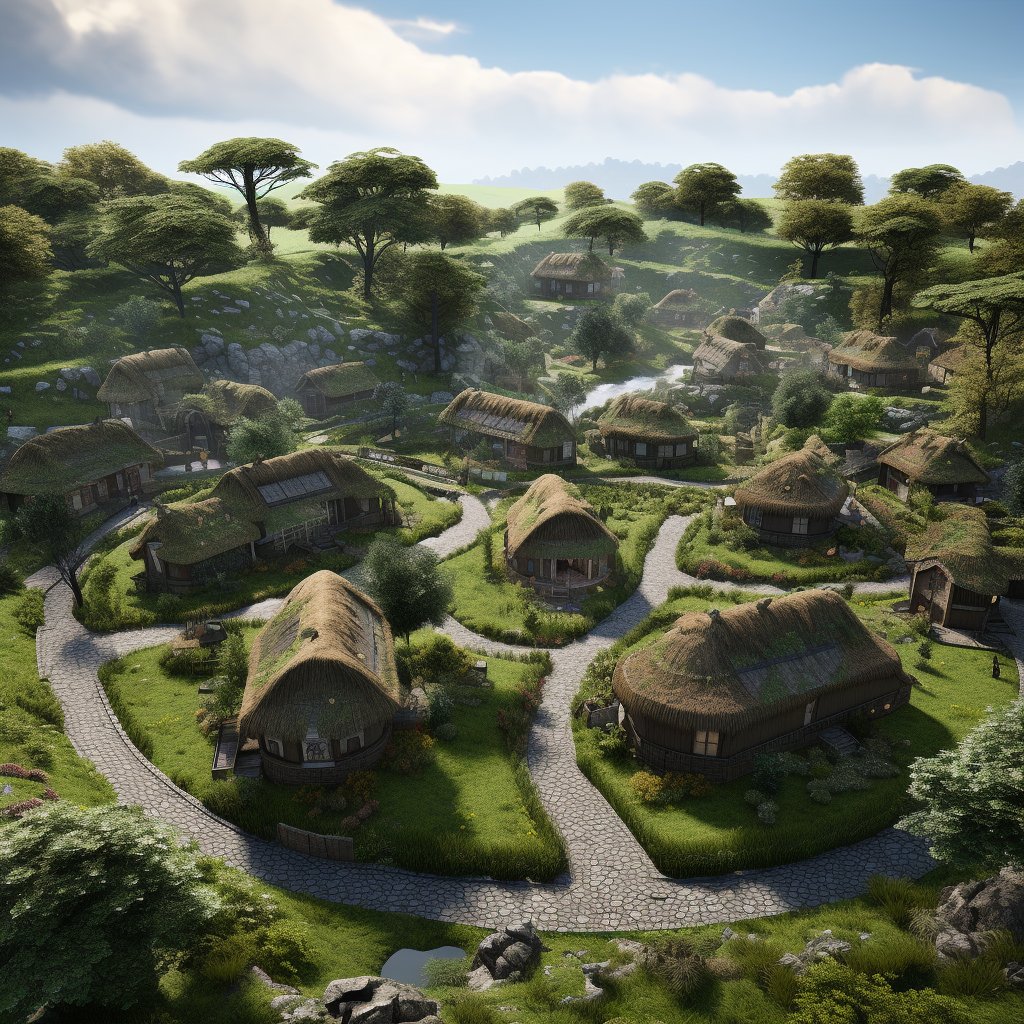
Among Western Nilotic peoples, the idea of “establishing a homestead” is universal, even if the vocabulary dances around.
The Dholuo call it goyo dala.
The Acholi prefer goyo gang.
The Lango say goyo ot.
The Alur go with goyo od.
The Shilluk speak of gödh pödh, while the Anuak talk of gudo luak.
Different accents, same ancestral stubbornness: a man must plant his own space on earth.
But here is the problem — the earth has become… inconveniently small.
The traditional dala assumed land was as abundant as Luo confidence. A homestead could sprawl, breathe, expand, and host enough houses to confuse Google Maps. Today, however, land in Luoland is being subdivided faster than a Nairobi landlord invents service charges.
The economics are brutal:
Demand is high. Supply is sulking in a corner.
And the modern house is no longer a temporary mud hut renewed every few seasons. It is a cemented, tiled, Wi‑Fi‑enabled fortress designed to outlive the builder. Durability has replaced ephemerality. Permanence has replaced improvisation.
So what happens when a cultural law born in abundance meets a 21st‑century land market that behaves like a jealous lover — clingy, expensive, and unwilling to share?
We must interpret goyo dala purposively and contextually. The spirit of the practice — continuity, identity, belonging — remains sacred. But the form? That may need a polite conversation with reality. Smaller plots, vertical building, urban homesteads, diaspora‑style “symbolic dala” — these are no longer betrayals; they are adaptations.
Which brings us to the uncomfortable but necessary question:
Should we preserve the traditional dala at all costs? or modernize the culture of goyo dala to match the current zeitgeist —This is why chik — customary law — must be read purposively and contextually. The spirit of goyo dala was never to turn ancestral land into a cultural version of real-estate confetti. Its purpose was dignity, continuity, responsibility, and recognition. If the old rule produced rooted families, then the modern interpretation must not produce landless grandchildren. The contemporary Luo is to decide whether cultural authenticity lies in preserving the old layout or preserving the old purpose through new forms.
Cultural Context
Traditionally, this made sense. Land was the stage on which adulthood performed itself. A man did not merely marry; he established. He did not merely sleep under a roof; he became socially visible. But today, land is no longer sitting politely waiting for every son to arrive with a panga and ambition. Demand is high, supply is stubborn, and economics has entered the homestead without removing its shoes.
Language: Dholuo, Dhosung · Origin: Luoland
🏛 REGIONAL VARIATION
Community Verified
An Acholi Perspective on Goyo Dala — Preserving the Purpose Through New Forms
Among the Acholi, the idea behind goyo dala — establishing one’s own homestead — is deeply familiar.
We may not use the exact Luo phrase, but the spirit lives in our own tradition of “goyo gang” or “yiko ot”:
the moment a person steps out of their father’s compound and plants their own fire, their own doorway, their own future.
A gang is not just a cluster of huts.
It is where your clan name breathes, where your children learn who they are, and where your ancestors find you without needing directions.
To build your own homestead is to say:
“I am ready to stand as a full branch of my lineage.”
But Acholi land today is not the land of our great‑grandparents.
Plots are smaller, families are larger, and the pressure on communal land grows each season.
If we insist on the old, wide homestead layout — many huts, cattle space, granaries, and room for every uncle who arrives unannounced — we risk exhausting the very land that gives the tradition meaning.
Our elders remind us:
“Gang ma pe tye piny, pe tye dano.”
A homestead without land cannot raise a person.
So the Acholi answer is not to abandon goyo gang, but to reform it with wisdom.
We keep the purpose — identity, continuity, belonging — while allowing the form to evolve.
Smaller compounds, vertical building, shared spaces, urban homesteads, and planned land use can still carry the dignity of a clan without swallowing the entire village.
Because in the end, the heart of goyo dala is not the size of the compound.
It is the continuity of the people who live in it.
And if we want our descendants to inherit both the culture and the soil beneath it, then we must preserve the tradition by allowing it to grow into new shapes.
Added by Aciro Alele Ayaa
Source: Julian Hopwood, An inherited animus to communal land: the mechanisms of coloniality in land reform agendas in Acholiland (2022)
Nyadol Garang
Maybe we should modernize without Westernizing
Rose Nyaboke
Nyadol ,How can we modernize without westernizing? Give an example? Or the chineese way?